
The most common type of urinary incontinence in women is stress urinary incontinence (SUI), which can negatively impact several aspects of daily life. Non-surgical vaginal therapies have been investigated as potential treatment options for SUI. This systematic review evaluated the efficacy of vaginal energy-based treatment for stress urinary incontinence in menopausal women.
INTRODUCTION
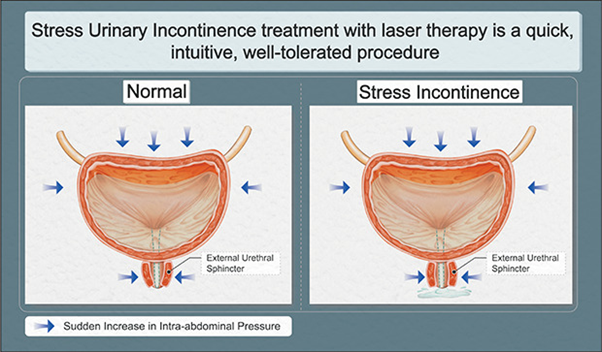
The most common type of urinary incontinence in women is stress urinary incontinence (SUI), which affects up to 35% of adult women and more than 50% of postmenopausal women [3]. Urine leakage during physical activity that increases abdominal pressure, such as coughing, sneezing, laughing or exercising, is known as SUI [1].
Damage to pelvic floor structures caused by vaginal delivery, as well as changes in the collagen composition of the endopelvic fascia associated with ageing and reduced oestrogen levels during menopause, can result in insufficient urethral support [4,5]. SUI can negatively affect many aspects of life, including work, physical activity and intimate relationships.
Non-surgical vaginal treatment has been investigated as an alternative option for women who may not require or wish to undergo surgery.
Vaginal energy-based treatment delivers controlled thermal energy to the vaginal tissues. The resulting thermal response may stimulate tissue remodelling and the production of collagen and elastic fibres. This process may help support changes in vaginal tissue quality and the structures involved in pelvic support.
For women with mild to moderate SUI, this type of treatment has been investigated as a minimally invasive option, particularly for those who do not wish to undergo an invasive procedure or have contraindications to surgery.
The treatment is generally performed as an outpatient procedure and does not typically require anaesthesia or hospitalisation. No incisions are required, although patients may be advised to temporarily avoid sexual activity following treatment.
RESULTS
A systematic review included 13 studies involving 818 women with SUI who underwent vaginal energy-based treatment. The findings suggested that this approach may represent a practical, minimally invasive treatment option for selected women with SUI.
One study found that the ICIQ-UI SF score improved significantly more following a single session of non-ablative treatment than in the sham control group after a three-month follow-up period, with no adverse events reported [6].
With a 14-week follow-up, another study found that the total ICIQ-UI SF score and nocturia (night-time urination) were significantly reduced following treatment compared with lubricant use. No serious complications were reported [8].
Another study reported a 72.6% subjective improvement, together with a significant reduction in episodes of urinary incontinence. During sexual intercourse, participants reported less urgency and urinary loss, as well as an improvement in quality of life. No adverse events were reported during the 12-month follow-up period [15].
The number of treatment sessions required to improve SUI symptoms varied between studies. Some studies reported improvements following a single treatment session [6,23], while another trial found that two sessions produced greater benefits [24].
The duration of treatment effects and whether maintenance treatment may be required remain areas of ongoing discussion and research.
The treatment approach was generally reported as well tolerated in the studies reviewed [6,27]. Some minor short-term effects have been reported, including a stinging sensation lasting up to two minutes, local sensitivity lasting up to two days and lower abdominal cramping following treatment [7].
CONCLUSION
Vaginal energy-based treatment has been investigated as a quick, minimally invasive approach for women experiencing stress urinary incontinence. Research reviewed in this study suggests that it may improve incontinence-related symptoms for some women.
Further research is required to better establish long-term outcomes, the most appropriate treatment protocols and which patients are most likely to benefit.
Women experiencing urinary incontinence should undergo appropriate clinical assessment to determine the underlying cause of their symptoms and discuss suitable treatment options with a qualified healthcare professional.
RESOURCES
Extract from NATIONAL LIBRARY OF MEDICINE
